Meeting Recap 10/25/12

Meeting Recap:

We were a little light last Thursday when we met, but we managed to get a lot done! We played around in our Universal Universe, and ended up with a few conceptual "races" and some stories that could happen under the Ice of our Europa like planet. 

Then, to test the colaborative, creative wiles of our group, we wrote up a little line-by-line short story about a dark and stormy night. Fun stuff!
(The Discussion, with the story at the bottom of it, are posted in the Editor's office)

NANOWRIMO!

All that being said We're looking forward to our Writing Goals for NANOWRIMO! (National Novel Writing Month for the unitiated.)

November is a month of many things... Facial Hair, Pomegranates, Native American Awareness, and Writing our brains out. The "traditional" rules are as follows:

***Write 50000 words (1667 words/day) before Midnight November 30th.***

With that lofty (but atainable) goal in mind Let's set some Goals for ourselves:

Alexander J. Turner: I plan to double the current word count (End with 10,000 words) of "More Letters" and bonus points if I can come up with a decent conclusion. 

Jn: Jn's going for the full monty! 50,000 words by 23:59:59 on November 30th, 2012. Godspeed!

More to come... Email Alex your personal Goals!


Oct 11th Meeting review

Prompt: Start a character arc for our universal universe. (Check out this post to learn more about what I mean) don't worry about matching it up with other writer's ideas, we'll be meeting next week to iron out some details with that.

The Meeting:
We talked about our Haikus, and learned that through the lens of haiku, just about everything takes on a little more meaning. Even things that aren't supposed to! (Link's to Valerie's Haiku)

The form lends itself to simplicity, and often takes on the environment we're in. (I was in a classroom, looking at a clock, thinking about time, Jn was on a plane, Indiana was looking at the fall colours...) It's a great way to exercise our observation skills and our poetic-thinking-brains, like snapping a poetic picture of our state and our surroundings.


Meeting Recap 9/29/12

Met to talk about our cliche mash-up poems, and it turns out that everyone liked our poems more than we did.

We now have a meeting time! Thursday 6-8, probably somewhere at RIT. Yay!

Prompt: Look at the Universal Universe, and add some things to your personal/group file, we'll be meeting again to talk about this soon, and collaborating online tonight till 8.

Other Prompt: 5 Haikus (3 lines, 5-7-5 Syllables each)

Haiku's are one of my favorite forms of poetry, largely because they are so limited in their scope. Just to get you started, haiku's are generally inspired by observation, and then that observation is posed as a metaphor on one or more levels. Since haikus are so short, each line, and each word can be taken independantly, and the piece can be read and broken down several different ways.

For some reason my haikus have always come in sets of 5, but that should not limit you. Write the 5 however you like (as a set, or 3 and 2, or each independently) We'll be going over them, as well as our additions and ideas for the universal universe next meeting.

We'll be doing our first colaborative assignment next meeting! Exciting sutff!

-Alex

Meeting Recap (from that one time)

First I'll apologize for being tardy in my handling of write club.
We had a brief meeting to consider our letters of encouragement. Our assignment through this week is to write into the world building file Jenn has so industriously provided.
Our homework is also this poetry prompt.
Choose a clichéd phrase ("fit as a fiddle," "think out of the box," "running on empty," etc.) and turn it around. Use the new meaning created by this reversal to fuel a poetic meditation.

Meeting Recap 8/18/12

Assignment: Write an encouraging bit of poetry or prose to Matt Benedict (either directly to, or dedicated to) and we'll take a look at it at our next meeting, and put it together

We took a trip to bolder coffee, I took a trip at bolder coffee, and we talked about world building.

The key question of world building is "what would it be like to live in a world where..." and "how does ... effect the way that I ..." the more ways that you can formulate that question and still get meaningful answers, the better your world building framework is, and the more real your story will seem.

The reason why it will seem more real is that you will be able to show how your world works by telling the What's, why's and how's of the way people live through events (interesting) instead of listing out facts and telling people the gears and fiddly bits behind the scenes.

Case in point: If you are world building a transportation system, don't tell us that it can go 250 miles per hour, show us how it feels to go 250 miles per hour, or take us on the journey twice, once with the "old way" and again with the new way, what are the consequences? Do new conflicts arise because people who normally didn't mingle now can travel about at ease?  That way the pieces that are important to each of your characters get highlighted, the nature lover misses the scenic route, the up and coming businessman loves that he can rub shoulders with the best and brightest, the adrenaline junky loves looking over the back to watch the ground zip by, and no one has to mention the speed or how it goes that fast or even what it is to know that it's changed the way that your characters interact with the world in a meaningful way.

In novels this adds depth and life to the setting (and characters) of your story, in short stories, a single world building "block" can play a central roll, or be the focus of the entire story. A very useful tool, and a lot of fun to play with.

Meeting Recap: 8/2/12

Assignment: Develop character arcs within a project that you're working on, or start a story with the character arcs we made during the meeting. (Not to be reviewed next week)

We went over our emotional sketch assignments from last week, and we learned a little bit more about short-short  fiction. (Insert "Who writes short-shorts? We write short-shorts!" joke here.) It didn't get too much focus but the idea of themes and dichotomies becomes more poignant, as it would in poetry. In Jn's work that looked like light/dark, in Mandy's it was up/down. We can add another layer of meaning by intentionally weaving these threads together. In a work that can be read two or three times in a sitting, those extra layers start to come out.

We read "Orange" a creative little Scifi story Jn found in an "In Flight" magazine (good snag!) that showed us a little different perspective on the dialogue exercise we did by using the format of an interview with just the answers.

Character Arcs:
Then we talked about Character arcs, based on this podcast from the guys at writing excuses
http://www.writingexcuses.com/2010/10/31/writing-excuses-5-9-character-arcs/

These are the stories of each individual character within a story, and in every great work of literature, there are compelling characters, and the reason why they those characters are compelling is that they (almost always) have their own compelling arcs within the larger story.

We talked about the 3 act structure, which provides a framework for planning out how the conflict will happen within the character's life (and within the story as a whole). Introduce the character's status quo, upset the status quo, resolve to new status quo. (if they can get back to the old status quo, the upset wasn't big enough)

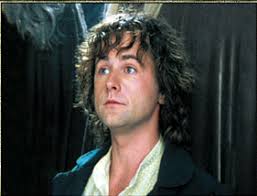
Example: Pippin Took
Introducing Pippin
A bumbling Hobbit who just wants to help Frodo and often doesn't understand the danger he's in.

The Status quo gets upset
Carelessly follows (or just bumbles) into riskier and riskier situations (Old Man Willow, Moria, Uruk Hai, The seeing stone) and barely makes it out with his own skin with significant help from others (perhaps showing just how unprepared he is for all this). Never really makes many decisions, just along for the ride, causing many to have to go back and help. He is largely a detriment to the fellowship, (entertainment value aside).

Pippin's Response
Decides to fight for a cause bigger than himself (Pledges service to Denathor) and starts saving others. He lights the signal fire to bring help from Rohan, and saves Faramir from being mistakenly cremated by Denathor.


Meeting Recap: 7/26/12

Assignment: Some traumatic or extremely exciting event has occurred in your characters life, write about their emotions and senses (What do they feel, sense, notice differently because of that event) but don't write out what actually happened to them. Goal 250 words (try to be concise, but don't restrict yourself if it turns into something longer.)

We planned to meet in Gilman Lounge, but the door was locked, so we climbed up on the roof and met anyways.

Talked about our dialogue exercises and discovered some useful dialogue tools, that will help to add depth to our stories without packing it into stilted dialogue.

How to differentiate characters:
-Dialect (aint, dunno, gonna)
-buzzwords (bro, shazzam, *whistle* chk-chk)
-Confidence level (careful with this one, it gets used a lot)
-Maturity (Father/son, master/apprentice)
-Education level (big words small words)

Here's the podcasts where I got the exercise (and some ideas):
http://www.writingexcuses.com/2010/12/27/writing-excuses-5-17-dialog-exercises/
http://www.writingexcuses.com/2011/01/16/writing-excuses-5-20-more-dialog-exercises/
Howard Taylor

The 4 authors who do this podcast are awesome teachers for epic fantasy (my eventual goal) but a lot of their stuff applies to short stories (fiction and non) as well.

In particular, Howard Taylor of the Shlock Mercenary Webcomic (schlockmercenary.com) does brilliant character arcs & sub plots (i.e. short stories within a comic that's been posted every day for more than 10 years.) I recommend you check out his work.

Brandon Sanderson
Brandon Sanderson does extremely good work in epic fantasy, and is one of the genre's best authors today. I've read his Mistborn series, very well done, and original in a genre where iconic cliches are so easy to overdo.
I'm not familiar with Dan's, or Mary's work, but I suspect that it is also good.


With that, I'll conclude this week's recap. Enjoy the writing prompt!


Interesting Fact: Howard and Brandon are both Mormon!